September 28, 2026 – “Remember that time is money,” declared Benjamin Franklin in his 1748 essay, Advice to a Young Tradesman.
Franklin’s revelation was an early statement on opportunity cost, or the value one gives up when making an economic choice. He gives an example in which one can earn ten shillings in a day by working, but if one spends half the day idle, then one has thrown away five shillings that could have been earned.
In capital markets, opportunity cost is everywhere, because capital committed to one asset cannot simultaneously earn the return available elsewhere.
One of the most popular examples is the opportunity cost of holding cash. Sure, cash is a safe asset not subject to the daily volatility of the equity market, but by holding cash one gives up the potential upside associated with higher returning investments such as stocks or other asset classes.
In a merger process, there are several tools available to bridge the gap between the acquiror’s bid and the target’s asking price. If there is a divergence in value, one tool to address it is the Contingent Value Right, which we discussed in the recent memo CVRs: Unlocking Hidden Upside in M&A Deals. In the memo, we noted that a CVR “is used to bridge the bid-ask price gap, in which the acquiror may not be willing to pay full value upfront due to uncertainty regarding the ultimate value of an asset, such as the result of a clinical trial, lawsuit, or business milestone.”
Another scenario that can create a difference of opinion between a buyer and a seller is around deal risk and duration. For example, if the buyer thinks regulatory risk is relatively low and deal duration should move quickly, while the target takes a more pessimistic view, the target may believe that it should receive compensation for its shareholders for deal delay risk. The mechanism to compensate target company shareholders for this opportunity cost is known as a ticking fee.
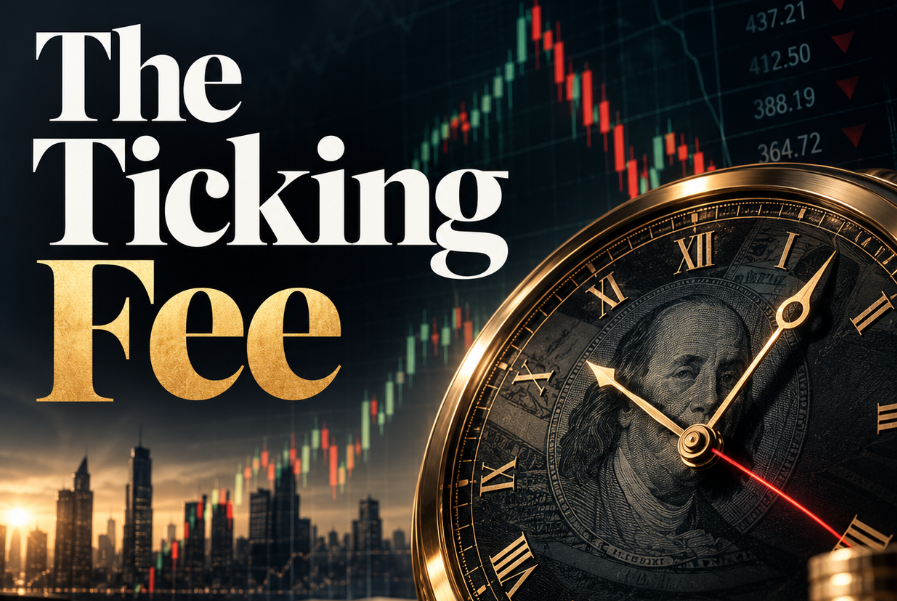
A ticking fee is part of a merger consideration that represents a cash payment accruing over a specific time period in which the deal has not closed. Its purpose is to compensate one party for the opportunity cost of waiting on a deal that has not yet been consummated. When the clock is running and a ticking fee is outstanding, the deal price for the target (and the cost to the acquiror) steadily increases. The fee is usually structured as a per-share amount that accrues daily or monthly, and is a trait featured in some mergers facing potentially long regulatory reviews, such as antitrust or government approval. If a deal fails and is terminated, the ticking fee pays nothing.
Recently, a ticking fee has played a role in a blockbuster media merger. In a heated takeover battle with Netflix, Paramount Skydance (PSKY) was the victor for the treasured asset, Warner Bros. Discovery (WBD). The definitive agreement was struck on December 8th, 2025, and was initially expected to close in the third quarter of 2026. In addition to the $31.00 cash per Warner Bros share offered, the target’s board negotiated the inclusion of a $0.25 per share per 90-calendar-day period ticking fee accrued daily (equal to $0.00277778 per calendar day), beginning after September 30, 2026, through to the closing date. This ticking fee compensated WBD shareholders for the time and regulatory risk of waiting for the deal to close. If the deal did not close by September 30th, the ticking fee will cost the acquiror $7 million per day until closing. Compared to the $31.00 cash consideration to WBD shareholders, the additional ticking fee translates into a 3.2% annualized yield.
While PSKY’s friendly acquisition of WBD has taken 293 days so far, deal completion appears on the horizon. A contentious lawsuit filed by a group of state attorneys general was recently settled, eliminating a final major hurdle to deal closing. As a result, PSKY indicated that it expects to close the transaction in the coming weeks, limiting its exposure to the ticking fee.
If the deal closes as expected in early to mid-October, then WBD shareholders will be paid $31.00 plus a few pennies from the ticking fee for their shares. While it ain’t much, the additional consideration respects the opportunity cost borne by investors and heeds Benjamin Franklin’s declaration that time is money.
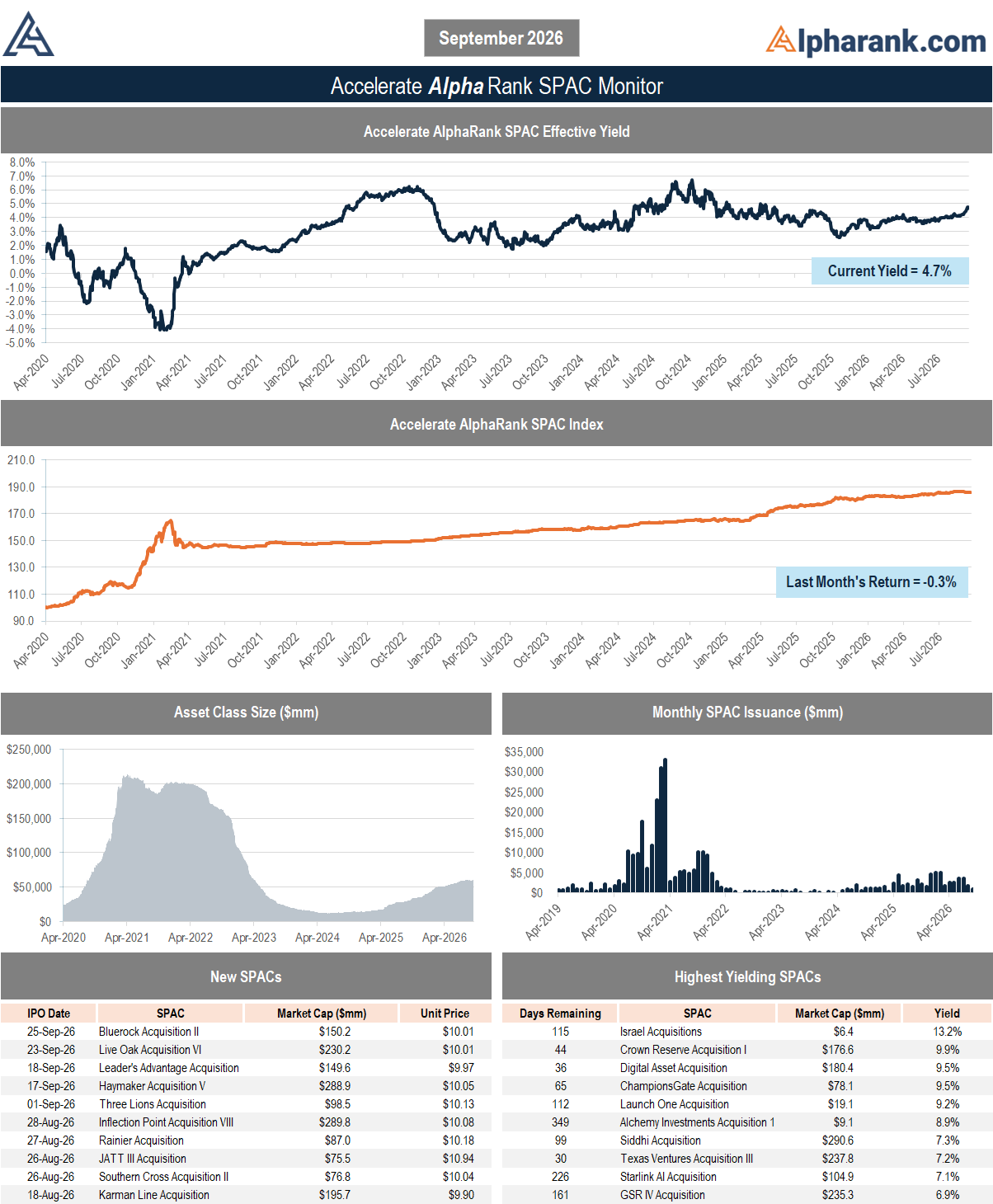
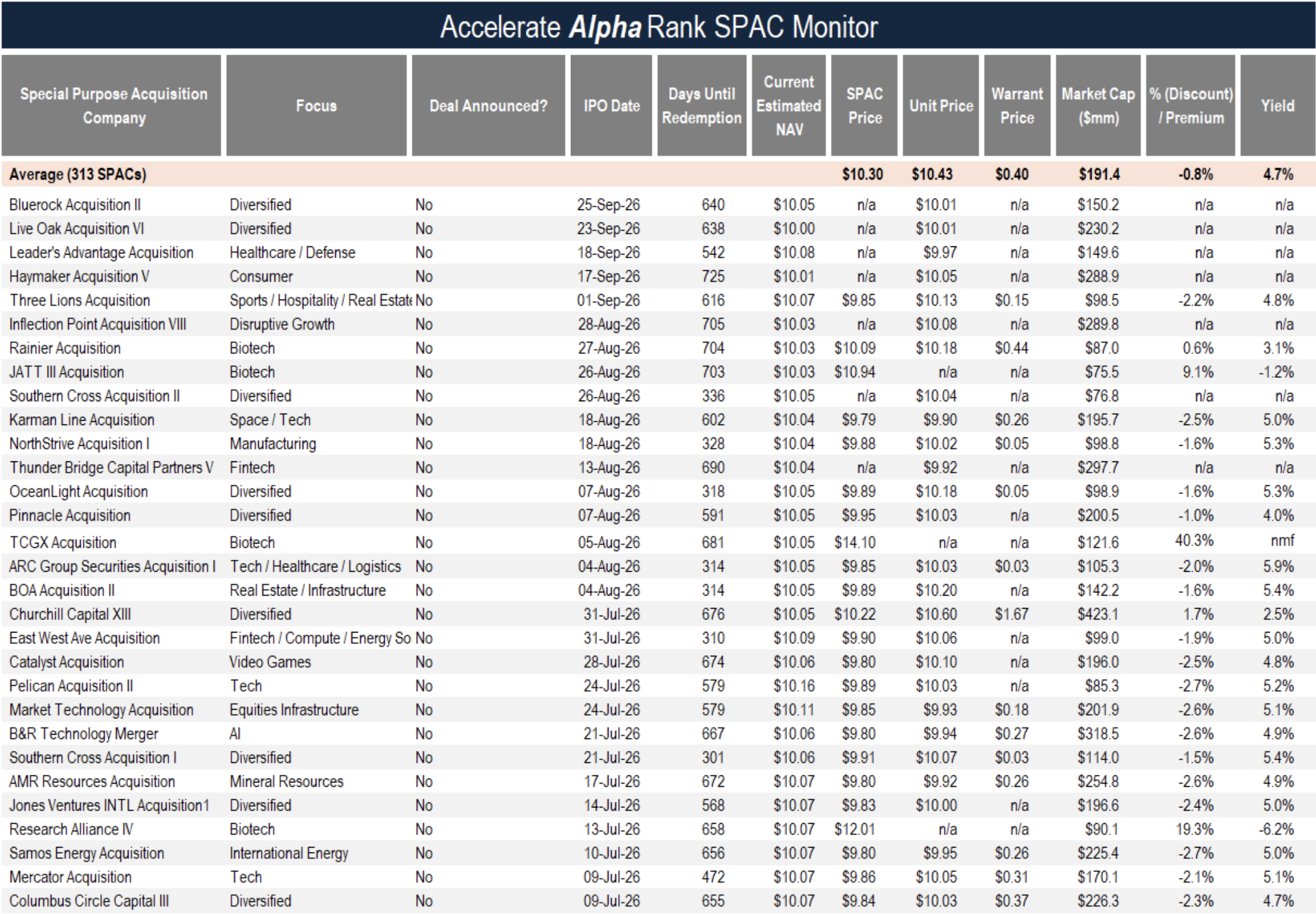
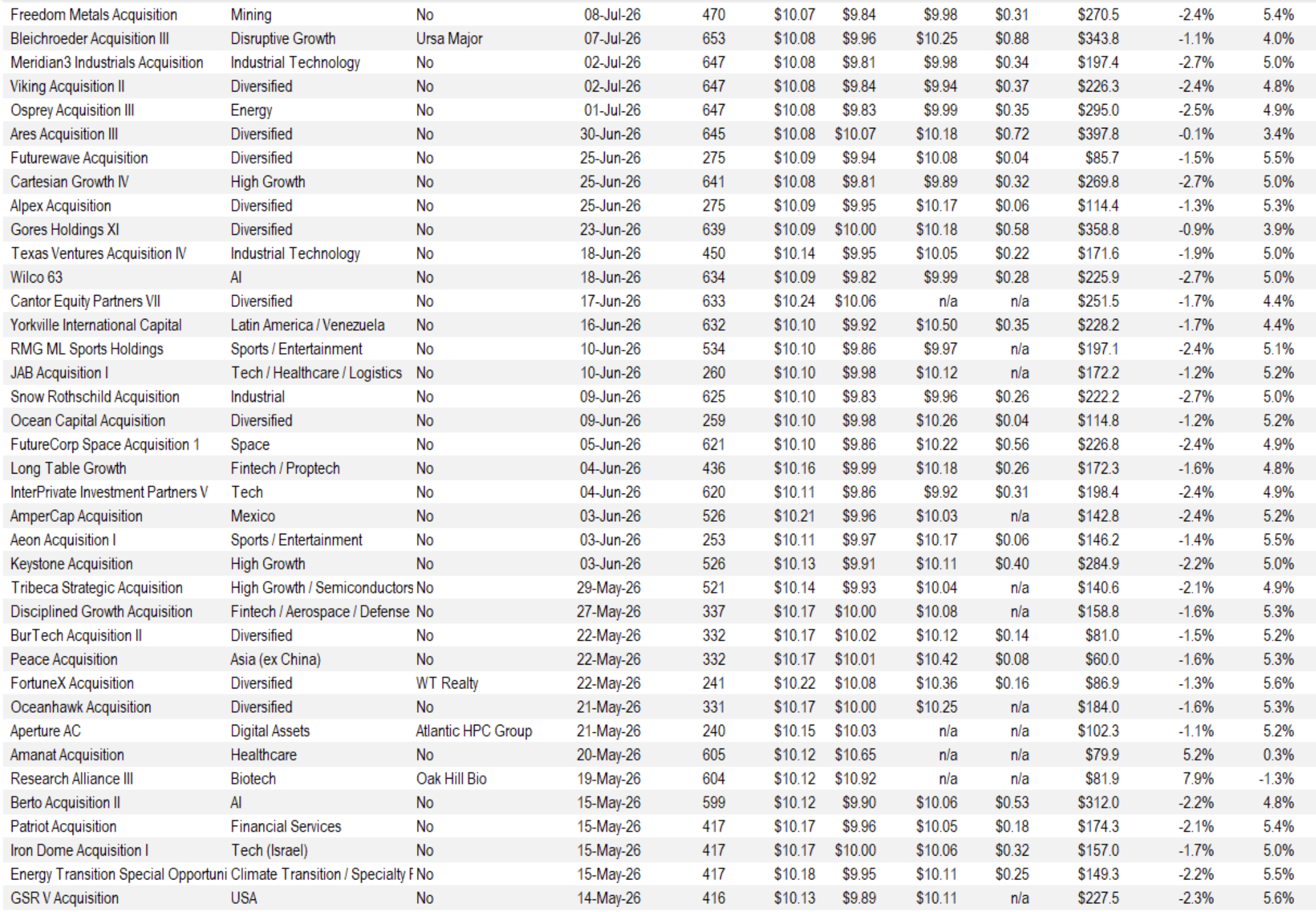
The AlphaRank.com Merger Monitor below represents Accelerate’s proprietary analytics database on all announced liquid U.S. mergers. The AlphaRank Merger Arbitrage Effective Yield represents the average annualized returns of all outstanding merger arbitrage spreads and is typically viewed as an alternative to fixed income yield.
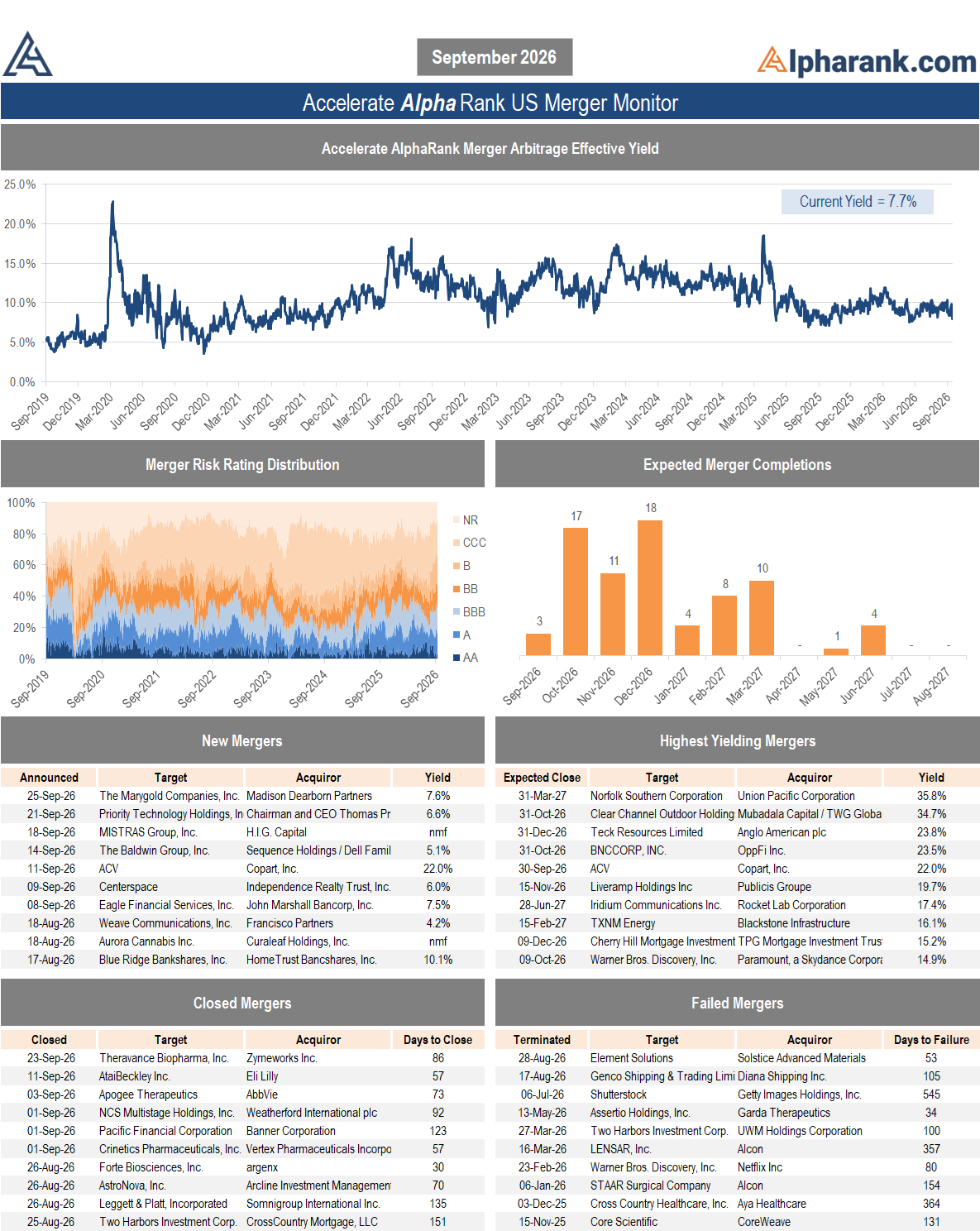
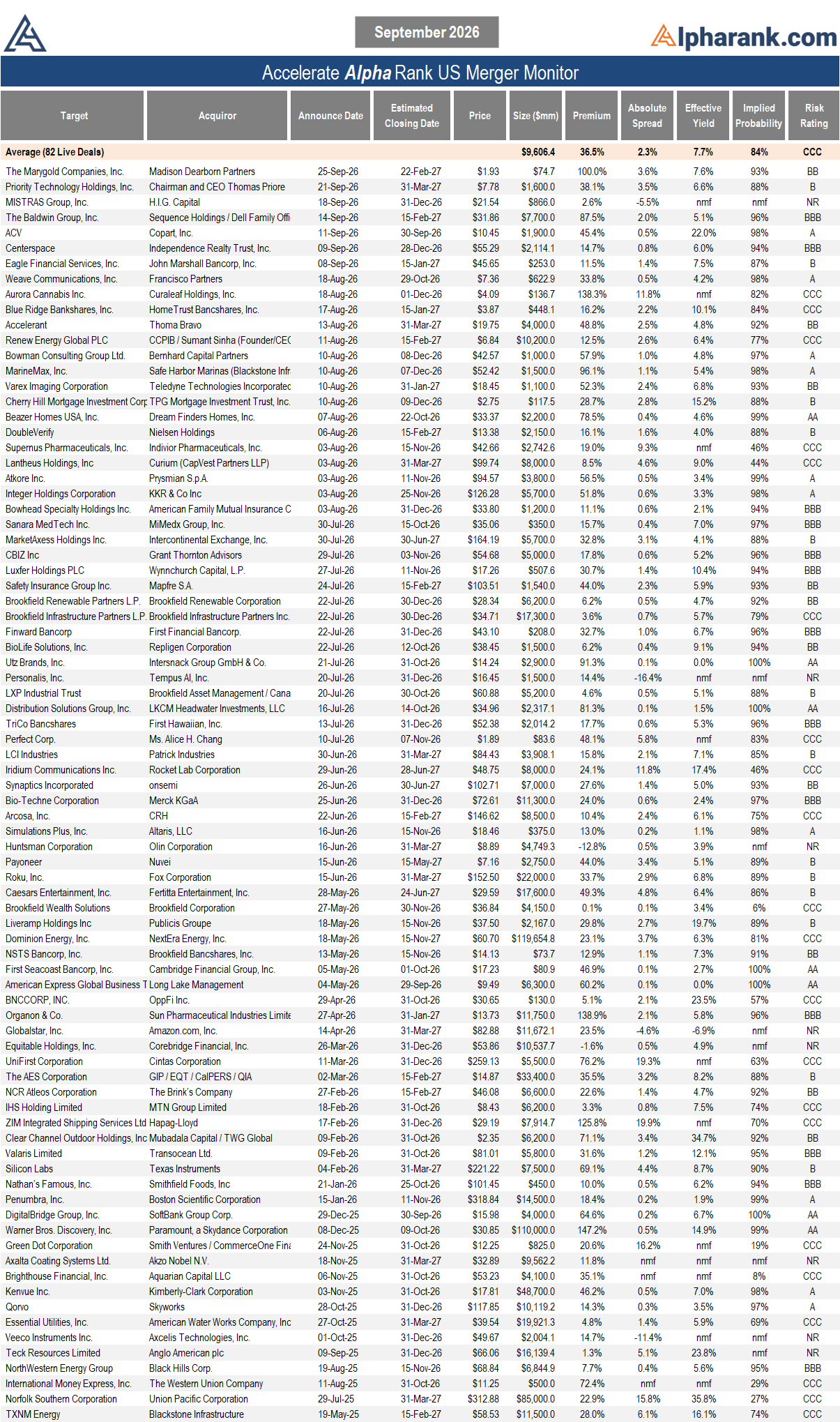
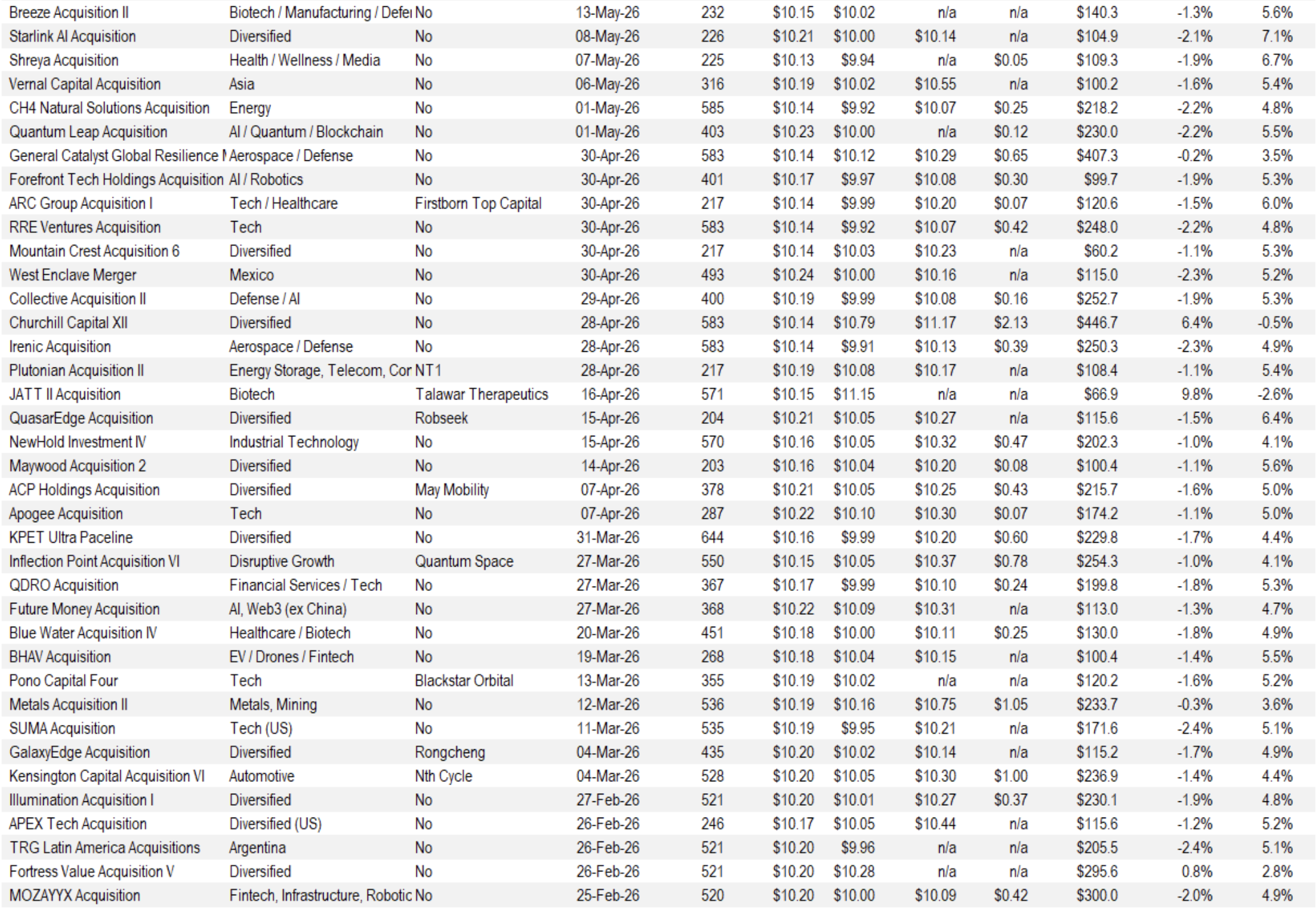
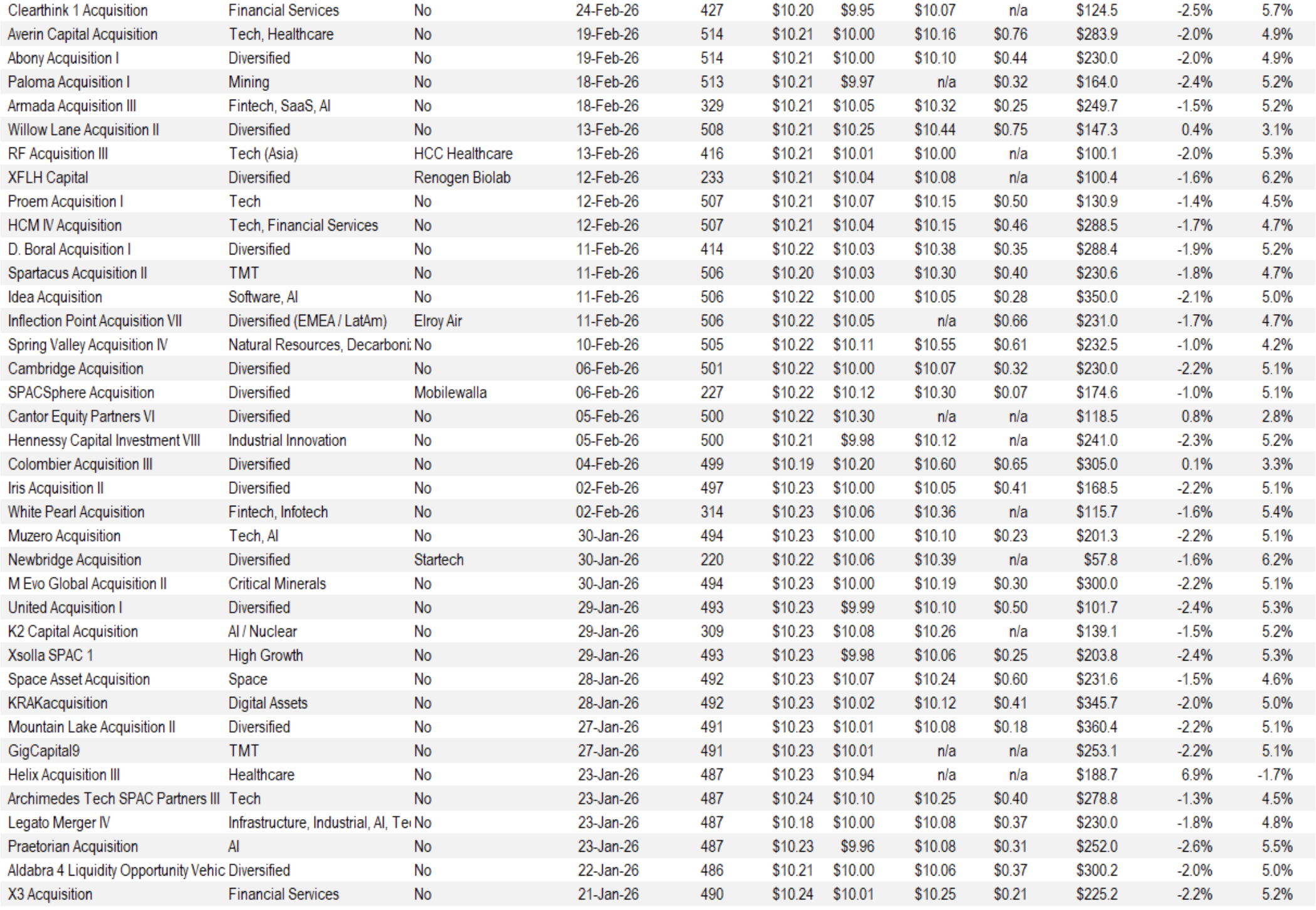
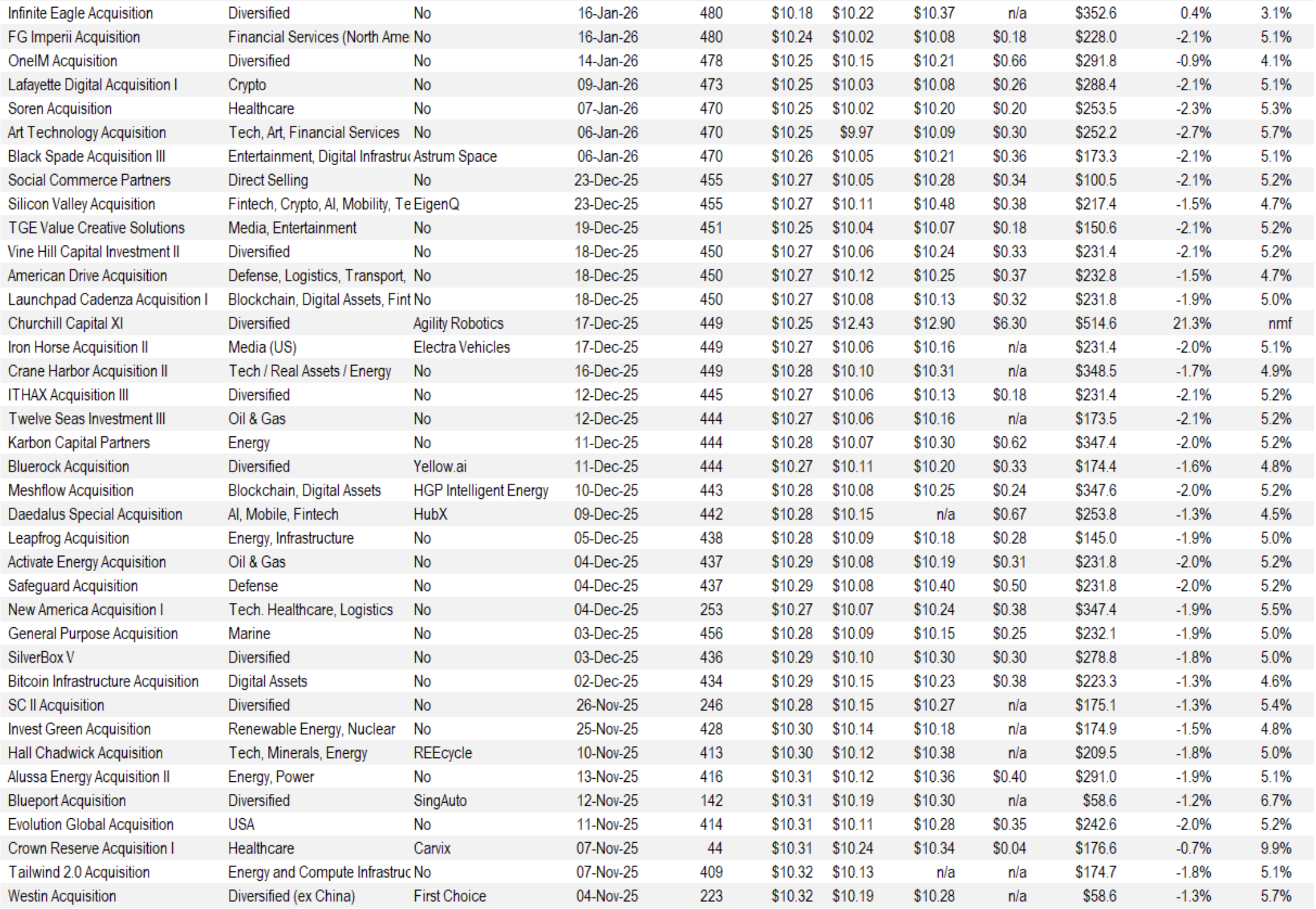
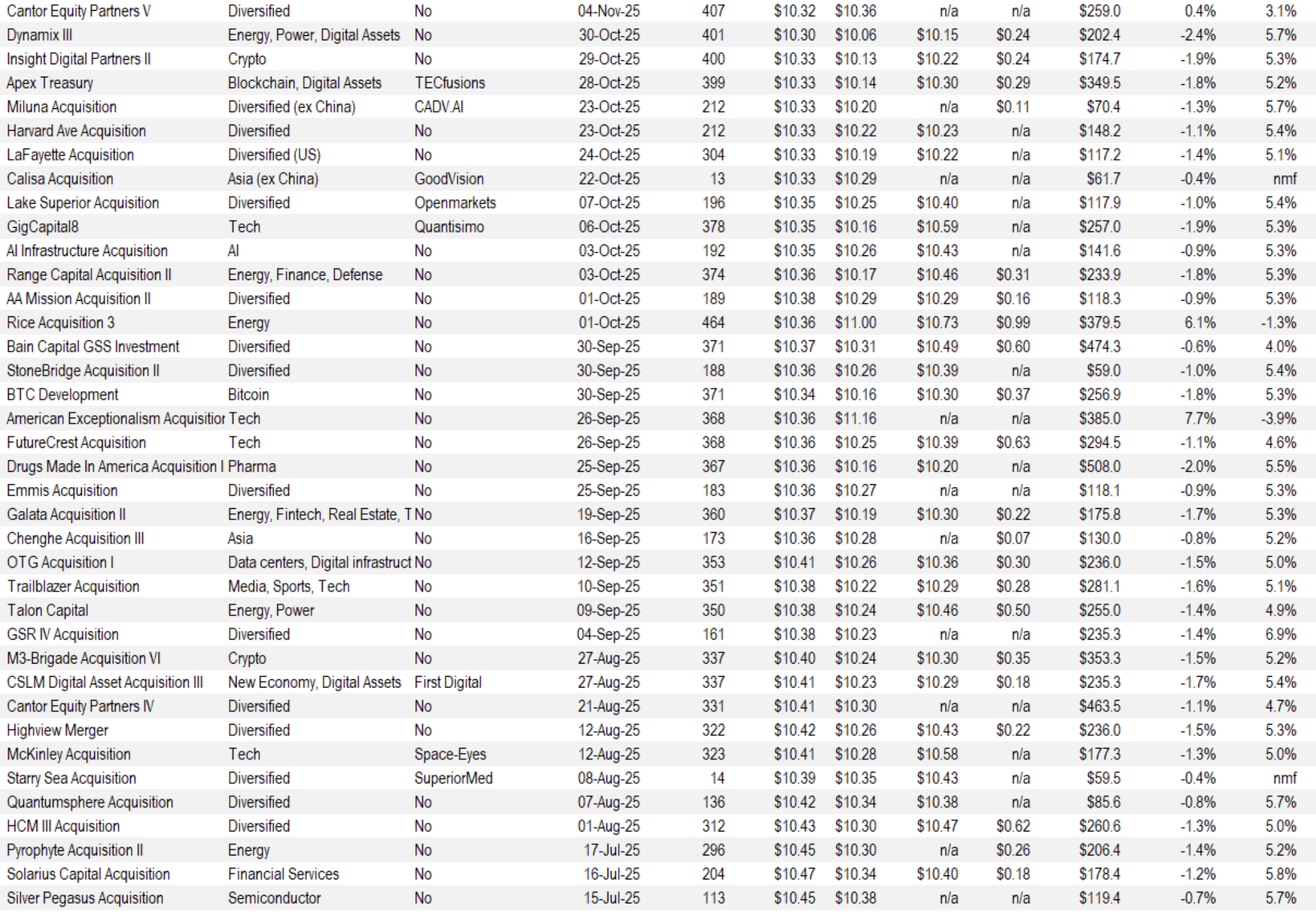
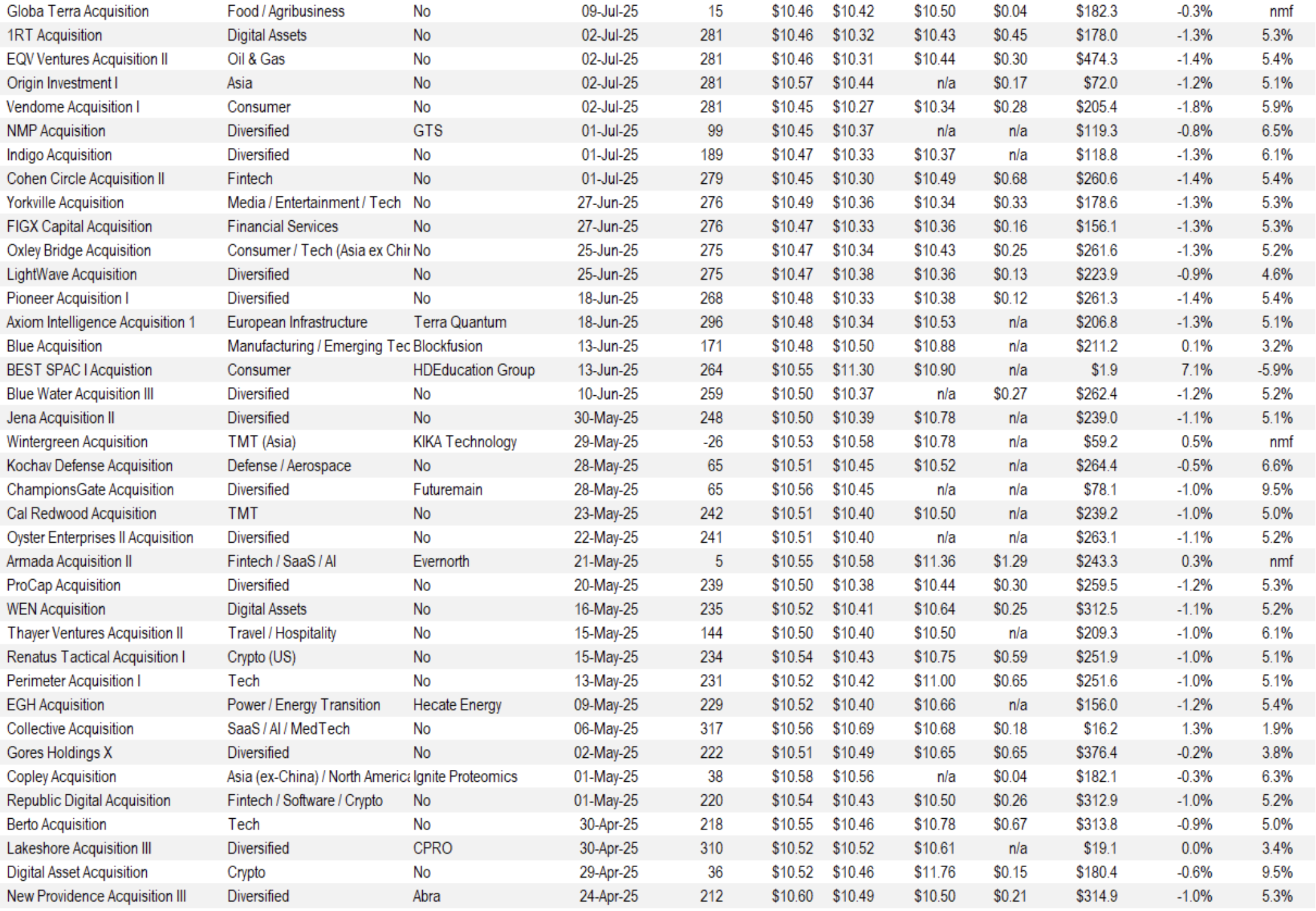
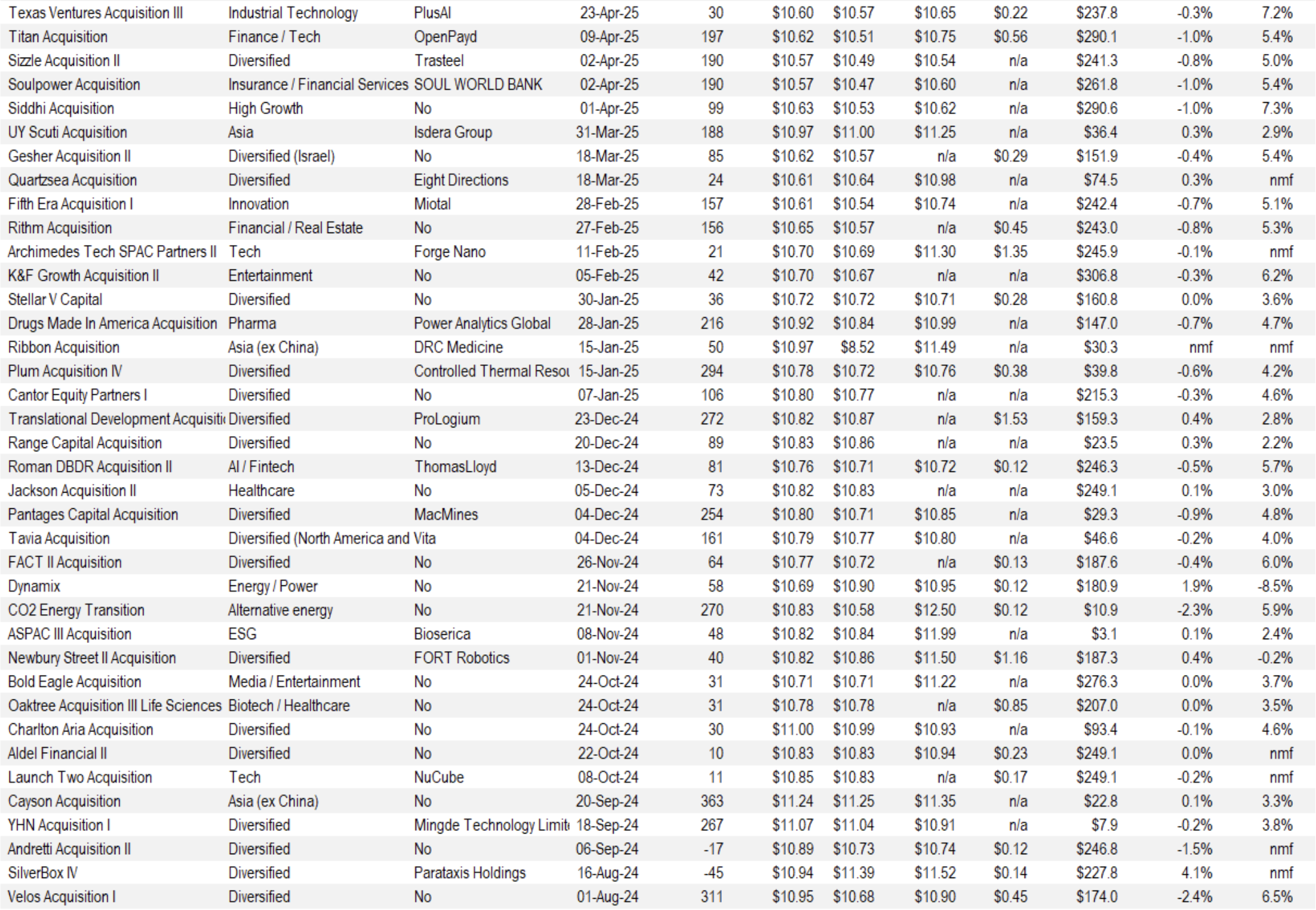
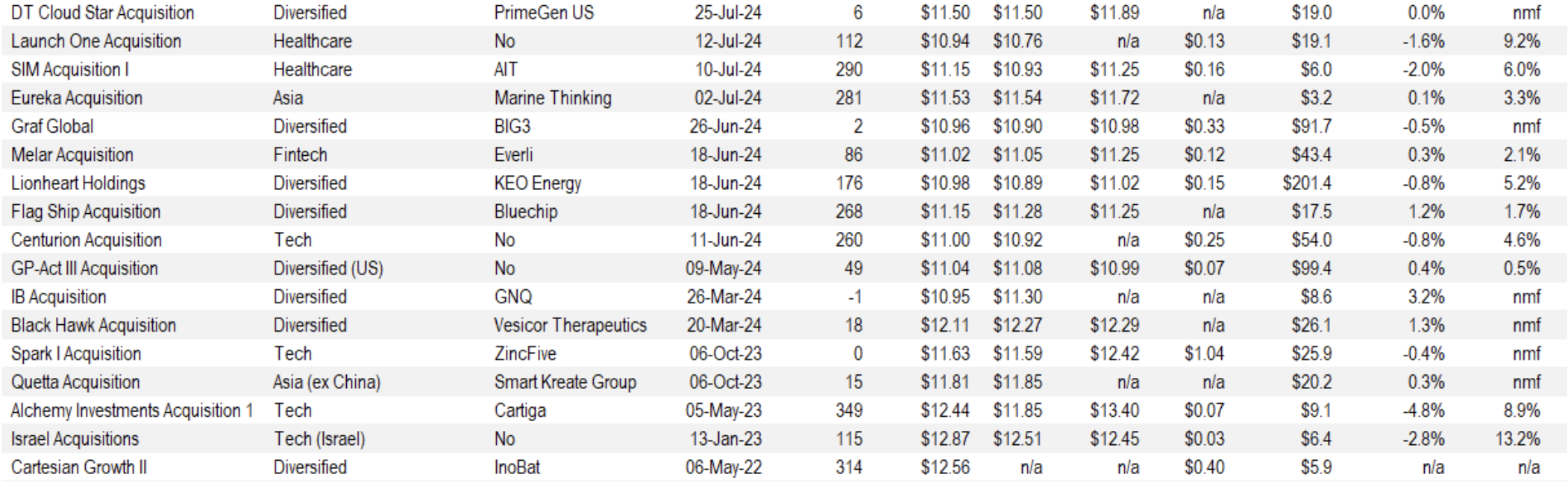
Each individual merger is assigned a risk rating:
- AA – a merger arbitrage rated ‘AA’ has the highest rating assigned by AlphaRank. The merger has the highest probability of closing.
- A – a merger arbitrage rated ‘A’ differs from the highest-rated mergers only by a small degree. The merger has a very high probability of closing.
- BBB – a merger arbitrage rated ‘BBB’ is of investment grade and has a high probability of closing.
- BB – a merger arbitrage rated ‘BB’ is somewhat speculative in nature and has a greater than 90% probability of closing.
- B – a merger arbitrage rated ‘B’ is speculative in nature and has a greater than 85% probability of closing.
- CCC – a merger arbitrage rated ‘CCC’ is very speculative in nature. The merger is subject to certain conditions that may not be satisfied.
- NR – a merger-rated NR is trading either at a premium to the implied consideration or a discount to the unaffected price.
The AlphaRank merger analytics database is utilized in running the Accelerate Arbitrage Fund (TSX: ARB), which may have positions in some of the securities mentioned.

* AlphaRank is exclusively produced by Accelerate Financial Technologies Inc. (“Accelerate”). Visit Alpharank.com for more information. Disclaimer: This research does not constitute investment, legal or tax advice. Data provided in this research should not be viewed as a recommendation or solicitation of an offer to buy or sell any securities or investment strategies. The information in this research is based on current market conditions and may fluctuate and change in the future. Accelerate does not accept any liability for any direct, indirect or consequential loss or damage suffered by any person as a result of relying on all or any part of this research and any liability is expressly disclaimed. Accelerate may have positions in securities mentioned. Past performance is not indicative of future results.